humanizer
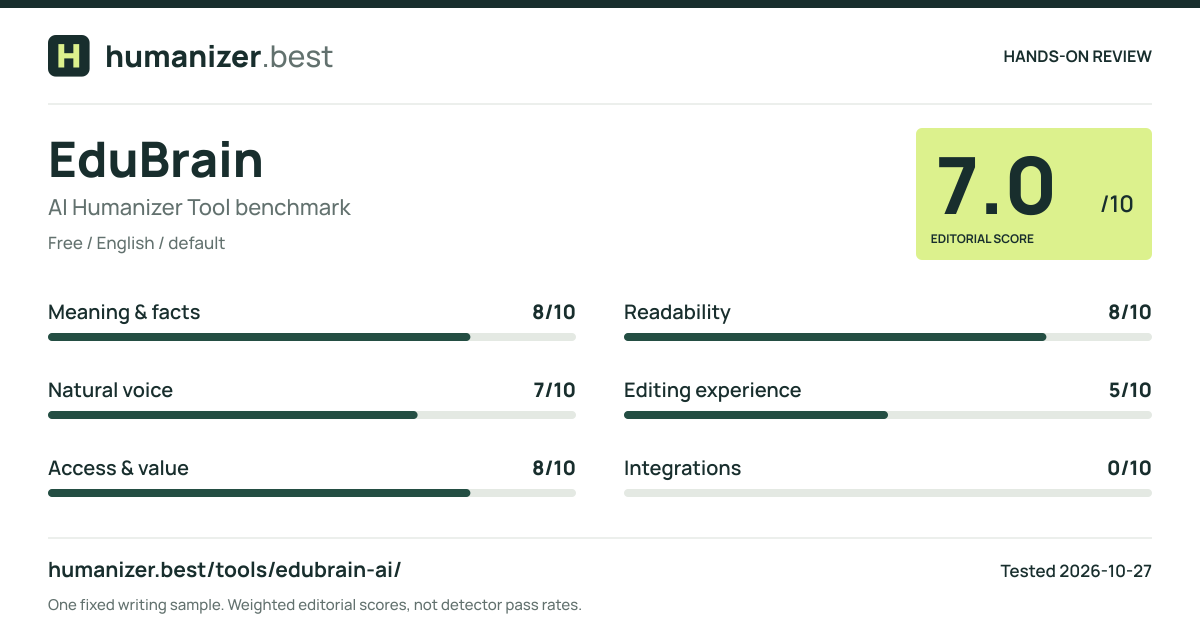
EduBrain
EduBrain kept the main facts and the productivity limitation, but its rewrite made the attendance increase sound causal. Our full free test shows the difference.
Website screenshot
Original and rewritten result
Free / English / default. Same benchmark; first complete output. Open any screenshot to inspect the original capture.
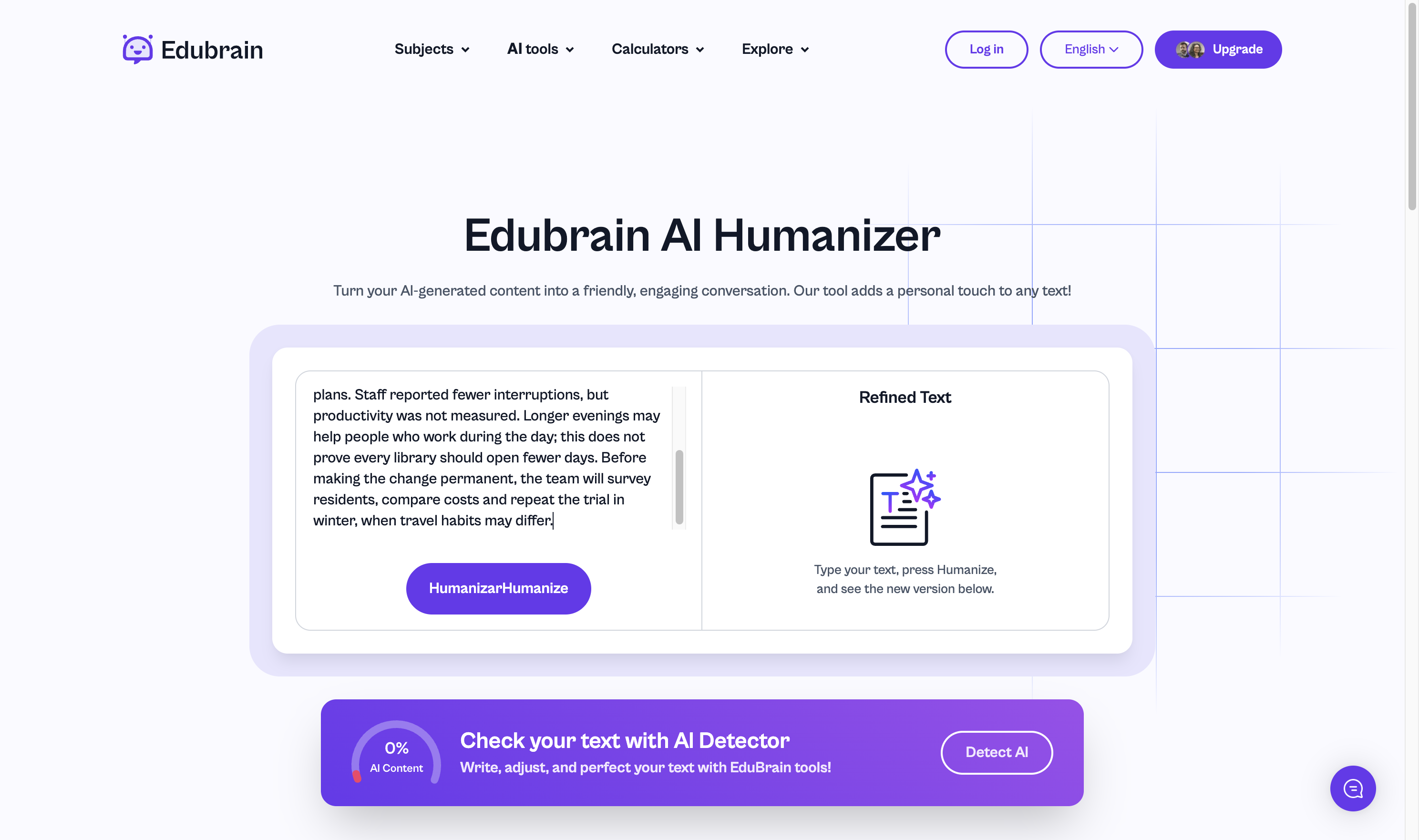
Original · 93 words
A local library tested a four-day schedule for six weeks. It kept the same 40 weekly opening hours, closing Wednesdays and extending Monday and Thursday evenings. Visits rose from 1,200 to 1,320 a week, although Wednesday visitors had to change plans. Staff reported fewer interruptions, but productivity was not measured. Longer evenings may help people who work during the day; this does not prove every library should open fewer days. Before making the change permanent, the team will survey residents, compare costs and repeat the trial in winter, when travel habits may differ.
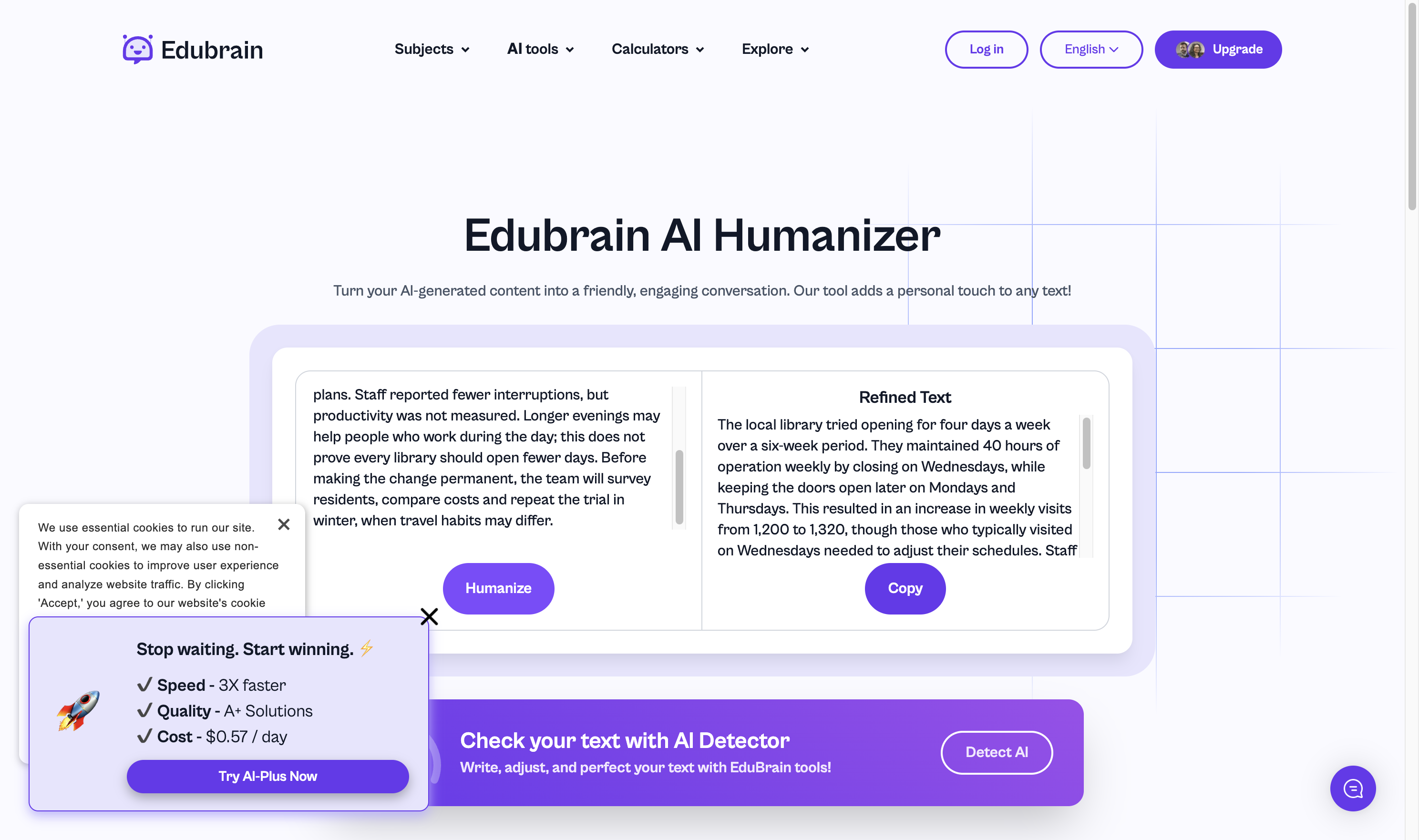
First rewrite
The local library tried opening for four days a week over a six-week period. They maintained 40 hours of operation weekly by closing on Wednesdays, while keeping the doors open later on Mondays and Thursdays. This resulted in an increase in weekly visits from 1,200 to 1,320, though those who typically visited on Wednesdays needed to adjust their schedules. Staff noticed interruptions occurred less often, yet productivity levels remained untracked. Extending evening hours could benefit individuals who have jobs during the day; however, this doesn't suggest that reducing operating days is ideal for every library. Before deciding to adopt this schedule permanently, the team plans to gather feedback from residents, evaluate cost implications, and conduct another trial during the winter months when travel patterns might change.
Parameters and feature comparison
Observed features refer to the tested plan. “Not verified” is different from “not supported.”
| Parameter | EduBrain |
|---|---|
| Free access | Full benchmark completed without payment. |
| Account required | No registration during this test. |
| One-click rewrite | Yes, full text through Humanize. |
| Word / line highlighting | No change-highlighting interface observed. |
| Sentence-level rewrite | Not observed in tested workflow. |
| API / MCP / Agent Skills | Not verified in reviewed official public material. |
| Plans / billing unit | Free $0/week with ads; AI-Plus $3.99/week for the broader suite. No paid humanizer comparison. |
Score breakdown
| Dimension | Weight | Score | What we found |
|---|---|---|---|
| Meaning & facts | 30% | 8/10 | Retains numbers, schedule, productivity caveat and winter follow-up, but “This resulted in” adds causal certainty. |
| Readability | 25% | 8/10 | Clear and grammatical; several phrases are longer than necessary. |
| Natural voice | 15% | 7/10 | Coherent explanatory prose, with a more formal and expanded voice than the original. |
| Editing experience | 15% | 5/10 | Simple full rewrite and copy workflow; no word diff or sentence-level editing observed. |
| Access & value | 10% | 8/10 | Free sample completed without registration; official free plan lists unlimited use with ads. AI-Plus is billed weekly; specific humanizer upgrade benefits untested. |
| Integrations | 5% | 0/10 | No official humanizer API, MCP or agent-skill documentation verified in reviewed public material. |
Overall 7.0/10 · weighted editorial judgment of the shown workflow. Read the method.
EduBrain AI Humanizer review: readable, with a causal caveat
A coherent free rewrite that retained most of the sample. We would change “This resulted in” and trim several expanded phrases before publishing it.
Read the analysis and recommendationSources and limits
- Official AI Humanizer editor and product information · checked 2026-10-27
- Official subscription plans and weekly billing · checked 2026-10-27
One English paragraph in the free default workflow. Paid modes, external detectors, long documents and developer integrations were not tested. AI-Plus benefits for this particular humanizer were not tested.